21/10/2026 12:30
Did the Caption Drop “Not”? TikTok Caption Checks for Cambodian Fan-Repair Shops
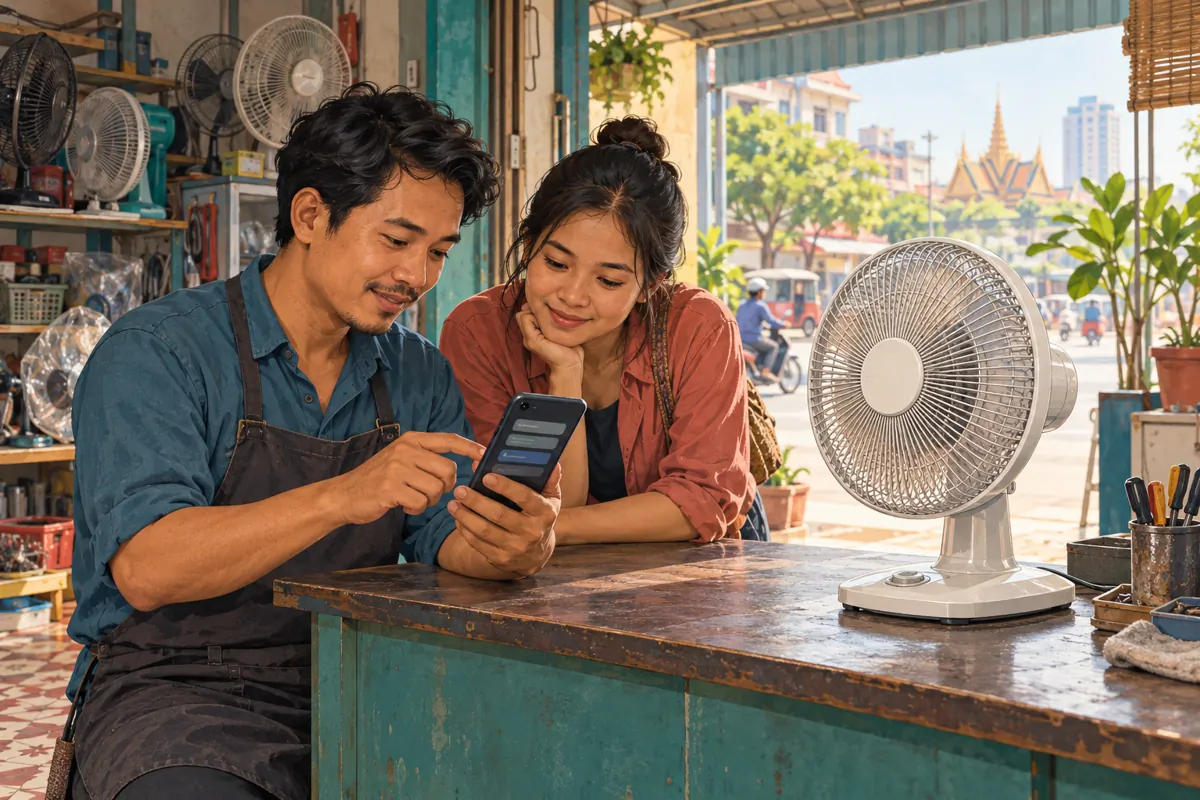
A missing word can change what a repair shop appears to promise. A technician says that cleaning does not resolve every noisy fan, but the subtitles omit the negative. Someone watching silently now sees a different claim. For Cambodian businesses explaining services through TikTok, caption review belongs beside checking the product and approving the offer. This guide follows a hypothetical fan-repair shop preparing a Khmer-language video about bringing a fan for assessment. It explains how to review generated text, preserve conditions, and decide whether the clip is ready for promotion. It also shows why an SMM panel counter cannot tell the shop whether viewers understood the message.
1. Give the video one customer decision
Start with the decision the viewer should be able to make. For this hypothetical shop, the question is whether to contact the workshop for an assessment, rather than whether to attempt a repair at home. The clip should identify the service, explain what remains uncertain, and give a manageable next step. That purpose determines which words deserve special attention during caption review.
Write a short internal brief before recording: explain the assessment process, avoid diagnosing a customer's fan from a generic example, and request the model information through the shop's chosen contact channel. Keep the demonstration focused on an intact appliance. A promotional explanation does not need to show internal electrical work to help customers understand what the workshop offers.
2. Separate speech captions from the promotional description
Here, captions means the subtitles representing speech within the video. The promotional description beneath a post has a different job: it can introduce the topic or provide contact context. An accurate description does not repair an incorrect subtitle that appears while the technician speaks. Review both, but do not treat them as interchangeable.
TikTok's official accessibility guidance describes creator captions that transcribe speech and can be edited, including their font style and color. Use generated wording as a draft requiring human review. This guidance does not establish that Khmer transcription will be available or accurate for every account and clip. Check the options actually offered in the app before planning around automatic recognition.
3. Prepare a short reference for meaning
Before filming, write the intended explanation in the language the technician will speak. Identify the service, the condition attached to it, and the action requested from the viewer. This reference helps a reviewer distinguish an actual transcription mistake from a harmless difference between a prepared script and natural speech.
For example, a hypothetical English rendering of the Khmer explanation might be: “Cleaning does not solve every noise. We assess the fan before confirming the repair and price.” The negative and the assessment condition carry the commercial meaning. Keep model names as printed on the product when appropriate, and have a fluent Khmer reviewer confirm the surrounding wording. Do not substitute an unfamiliar technical term merely because an automatic transcript looks confident.
4. Record speech that is easier to verify
Choose a quieter moment in the workshop and record the speaker close enough for their words to be clear. Pause unrelated conversation during the take. If background noise masks a key phrase, record that sentence again instead of expecting a caption editor to reconstruct it. Clear source audio also makes the later comparison between speech and text more reliable.
Speak each qualification as part of the main explanation. Avoid rushing “after assessment” into the final second or speaking it while turning away from the microphone. Leave a natural pause between the service explanation and the contact request. These are editorial choices, not promises of better distribution: their purpose is to give viewers time to understand what the shop actually offers.
5. Review generated wording in order of consequence
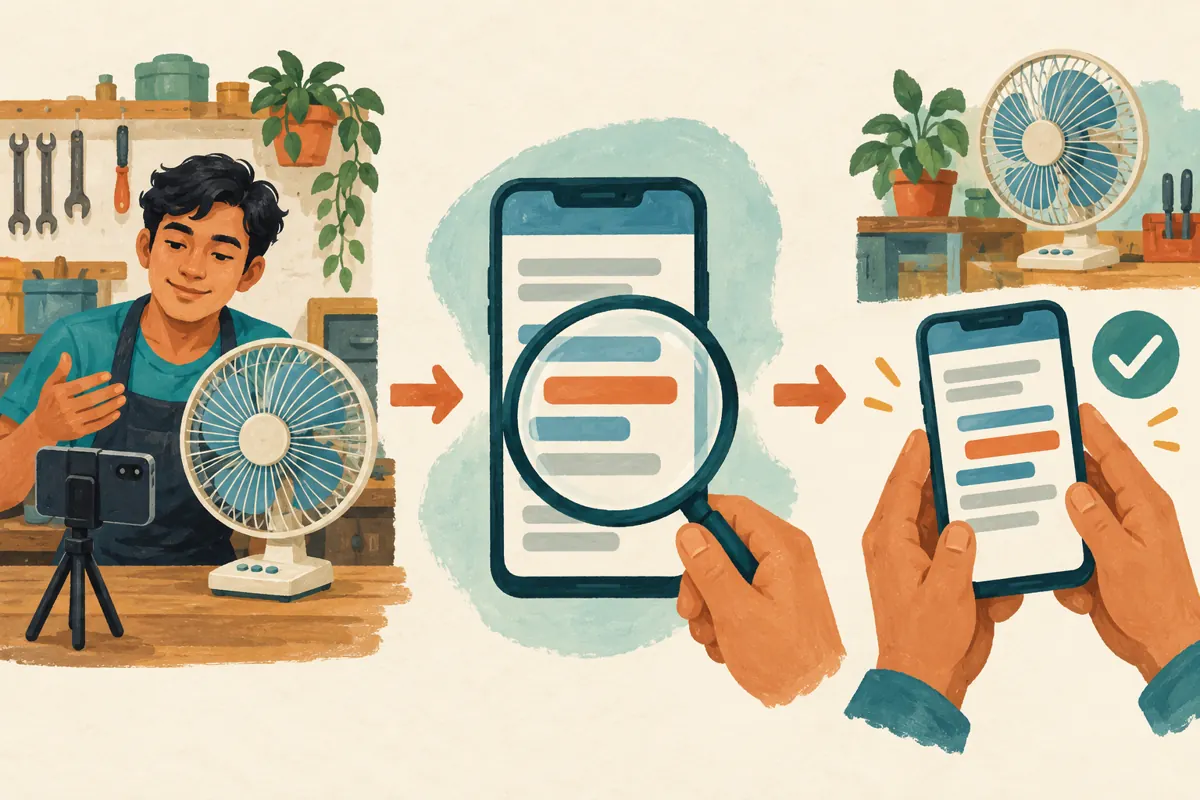
Where the app offers caption generation, create the draft and compare it with the actual recording. First check words that reverse or limit a claim: not, only, may, before, after, and subject to assessment. Next check the service and model references. Then review any spoken prices, dates, collection arrangements, or turnaround conditions. Finish with punctuation and cosmetic wording.
In the hypothetical clip, a subtitle reading “Cleaning solves every noise” must stop the review immediately. Correcting a spelling error elsewhere would not make that version ready. If the audio itself makes an unsupported promise, changing the subtitles alone is insufficient; revise the spoken passage too. The goal is agreement among what the technician says, what the viewer reads, and what the shop can provide.
6. Choose a fallback when Khmer recognition is unsuitable
If the required caption option is missing or the transcript is substantially wrong, choose a workflow the team can verify. One practical fallback is to prepare manually checked subtitles in the video editor used for the original clip, then export a new version. Keep the clean source recording so corrections do not require rebuilding the entire video.
Have someone fluent in Khmer review the exported text on a phone. Check complete words, punctuation, and whether the sentence remains readable at normal playback speed. Do not select an unrelated transcription language simply to obtain output. When English model names appear within Khmer speech, retain their accurate spelling without turning the whole subtitle into English. Before approval, check whether multiple visible caption layers overlap.
7. Test meaning with the sound off
Ask a colleague who did not write the script to watch the finished preview silently. Ask them to explain what service is offered, what is still unconfirmed, and what they would send to the shop. These questions test comprehension more directly than asking whether the video looks good. If their answer implies a guaranteed repair, locate the phrase or image that created that impression.
Check placement as well as wording. Subtitles should not cover the model label being discussed or the exterior feature that distinguishes one fan from another. Keep each condition visible long enough to read with the claim it qualifies. Avoid splitting a negative from the rest of its sentence across separate moments. Then replay with sound to confirm that the text and narration still agree.

8. Make the enquiry request fit the shop's capacity
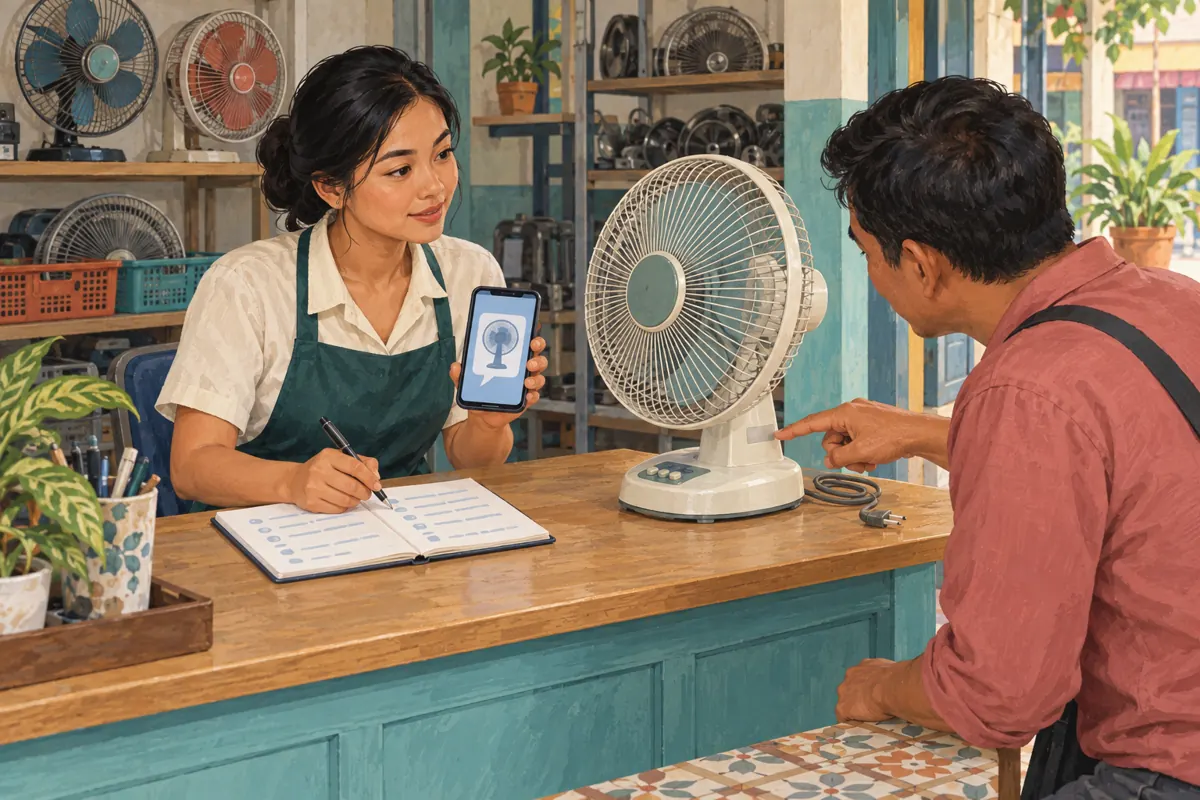
Close with a request staff can handle consistently. The hypothetical workshop might ask customers to send the model name and describe the problem through its normal enquiry channel. Explain that a message begins an assessment conversation; it does not confirm a repair slot, price, or collection arrangement. Publish only the contact and availability information the shop has checked.
Prepare the staff response alongside the clip. If viewers are invited to ask about assessment, the person answering should know which information is needed and when a technician will review it. Avoid asking customers to post addresses or phone numbers publicly. A clear next step makes promotion useful because the team can respond to the interest the content actually generates.
9. Review the SMM decision separately
The supplied angkorsmm.com catalogue includes the exact title “TikTok - Video Views ~ Max Unlimited ~ 10M/Days ~ Instant ~ 𝐍𝐎 𝗥𝗘𝗙𝗜𝗟𝗟”. Its title identifies a video-view offering, but the supplied description is empty. The wording therefore supplies no verified basis for promising delivery speed, audience location, viewer identity, or caption comprehension. It also does not establish a caption-editing service.
TikTok's Integrity and Authenticity guidelines prohibit services that artificially increase engagement and describe enforcement against inauthentic metrics. A panel listing does not override those rules. Decline artificial engagement as a way to promote this clip. Purchased engagement would not establish genuine interest, sales, ad delivery, or Cambodian users. Caption production and legitimate content distribution should be evaluated on their own merits, without presenting a purchased counter as customer evidence.
10. Approve the exact version and learn from real questions
Use a simple release decision. If the spoken claim is wrong, rerecord it. If the speech is correct but the subtitles are wrong, correct the text and repeat the preview. If a reviewer cannot understand the condition, simplify the explanation. Approve the clip only when the service, limits, and next step agree. Keep a dated copy of the approved wording with the final video reference.
After publication, review the actual post and the questions it receives. Repeated requests for a guaranteed price may indicate that the assessment condition was unclear, although they do not prove a caption caused the confusion. Record the question and the relevant wording before revising. Keep enquiries, confirmed assessments, and accepted repair work as separate records. If an existing panel order is involved, retain its reference separately and avoid treating delivery records as business results.
Frequently asked questions
Should a Cambodian shop use English captions if automatic Khmer captions are unavailable?
Choose the language your intended viewers can understand, rather than the one that happens to produce an automatic transcript. If the explanation is for Khmer-speaking customers, manually reviewed Khmer subtitles may be the more useful option. English model names can remain where they identify the product accurately. Any additional translation needs its own meaning check.
Can we shorten the speech when writing subtitles?
Minor cleanup should preserve the speaker's meaning, including qualifications and uncertainty. Do not remove a condition to make the text fit. If accurate captions are too dense to read, shorten or rerecord the explanation itself. This keeps the spoken and written versions aligned instead of making silent viewers receive a different offer.
What should we do if a caption mistake is discovered after posting?
Pause further sharing while checking the correction options available for that post. If the error changes the offer or reverses the advice, prioritize making an accurate version available and correcting affected enquiries. Do not assume that a comment will reach everyone who saw the video. Verify the resulting post before resuming promotion.
Does a larger view count show that the new captions worked?
No. A view count does not demonstrate that someone read, understood, or acted on a subtitle. Use a colleague's comprehension review before release and examine genuine questions afterward. Even clearer enquiries are only an indication worth investigating, since the subject, audience, timing, and staff responses can also influence what customers ask.
Can an SMM service repair inaccurate subtitles or find local repair customers?
Neither capability is established by the supplied video-view listing, whose description is empty. Do not infer subtitle editing, Cambodian targeting, or qualified enquiries from a service name. Resolve content errors through the production workflow. Evaluate any separate marketing assistance by its documented work and platform compliance, without equating purchased engagement with local demand.
Explore the current service catalogue, create an account, or ask a specific question through support tickets.
- TikTok Inclusion and Belonging Guide — Supporting Accessibility: Video Tools
- TikTok Community Guidelines — Integrity and Authenticity
Prepared with AI assistance. Illustrations explain the workflow and do not represent customer results.