
21/10/2026 05:15
What Did the Offer Actually Say? Telegram Campaign Exports for Cambodian Uniform Shops

A school-uniform promotion can leave behind several different memories: the photograph showed a complete outfit, the caption mentioned a shirt, and the shop assistant remembers discussing alterations separately. When the next selling season arrives, copying that campaign without checking its context can bring the same confusion back. For Cambodian uniform shops promoting through Telegram, a carefully checked campaign export can provide a useful reference for future content. This guide explains how to preserve a focused record, examine what it actually contains and turn the findings into a clearer offer. It also explains where an SMM panel record belongs: alongside the campaign history, with its own limitations, rather than serving as proof that local families wanted the products.
1. Start with one question the archive must answer
Before exporting anything, write a narrow review question. For a uniform shop, it might be: did the promotion clearly explain whether trousers were included? Other useful questions concern embroidery, alteration charges, collection arrangements or which sizes the photograph represented. A specific question helps you identify the relevant announcement, follow-up explanation and supporting photograph without collecting unrelated conversations.
Consider a hypothetical shop in Battambang preparing another school-uniform campaign. Its earlier photograph displayed a shirt beside navy trousers, while the caption described a shirt offer. The owner wants to understand why customers asked about a complete set. The archive review should examine the relationship between that photograph and its wording. It should not begin with a search for evidence that the campaign was successful. Write down what remains unknown, including whether a later explanation was visible before particular enquiries arrived.
2. Choose the smallest useful export
Telegram documents exporting individual chats through Telegram Desktop: open the relevant chat’s three-dot menu and choose Export chat history. Its export feature supports offline HTML and JSON output, including media. Use the official desktop application and inspect the available options in your installed version. Telegram’s own instructions provide the starting point. [Telegram export guide](https://telegram.org/blog/export-and-more)
For this workflow, prefer the shop’s promotional channel over an account-wide collection. Define the campaign period and identify any necessary surrounding announcements. Where the export dialog offers scope and media controls, choose settings that retain the material needed for your question. Record those choices in a short accompanying note. If an option is missing or unavailable, document that limitation instead of assuming the archive contains everything. Avoid adding private customer chats merely because they mention the same garment.
3. Choose a format your reviewer can use
For an owner reading captions and checking photographs, HTML is usually the practical choice. JSON suits a reviewer who already has an agreed method for working with structured data. Choose according to the review task; a more technical format does not make an interpretation more reliable. Most small shops can begin with a readable archive and a separate page of findings.
Keep the export’s files together in a clearly named campaign folder. Include the shop identifier, campaign subject and export date in your naming convention. Add a note explaining which channel was selected, what period you intended to review and which media categories you included. Record the computer’s time zone so later comparisons have context. Keep your observations in a separate document: the original export should remain distinguishable from the owner’s conclusions and proposed changes.
4. Open and check the archive before relying on it
A completed export still needs a practical reading check. Open the result and locate the campaign’s main announcement. Confirm that Khmer captions display legibly, relevant images open and any essential document is present. Then look for the follow-up announcement that clarifies the offer. Check an item near the beginning and another near the end of the intended period. These checks can reveal an incomplete scope before someone writes a misleading review.
In the hypothetical Battambang campaign, the shirt photograph alone would be insufficient if the inclusion details appeared in a separate size document. If that document is missing, mark the archive as incomplete for the question being investigated. Do not fill the gap from memory. A colleague should be able to find the same material using your review note. If they cannot, improve the references or explain the missing evidence before drawing conclusions.
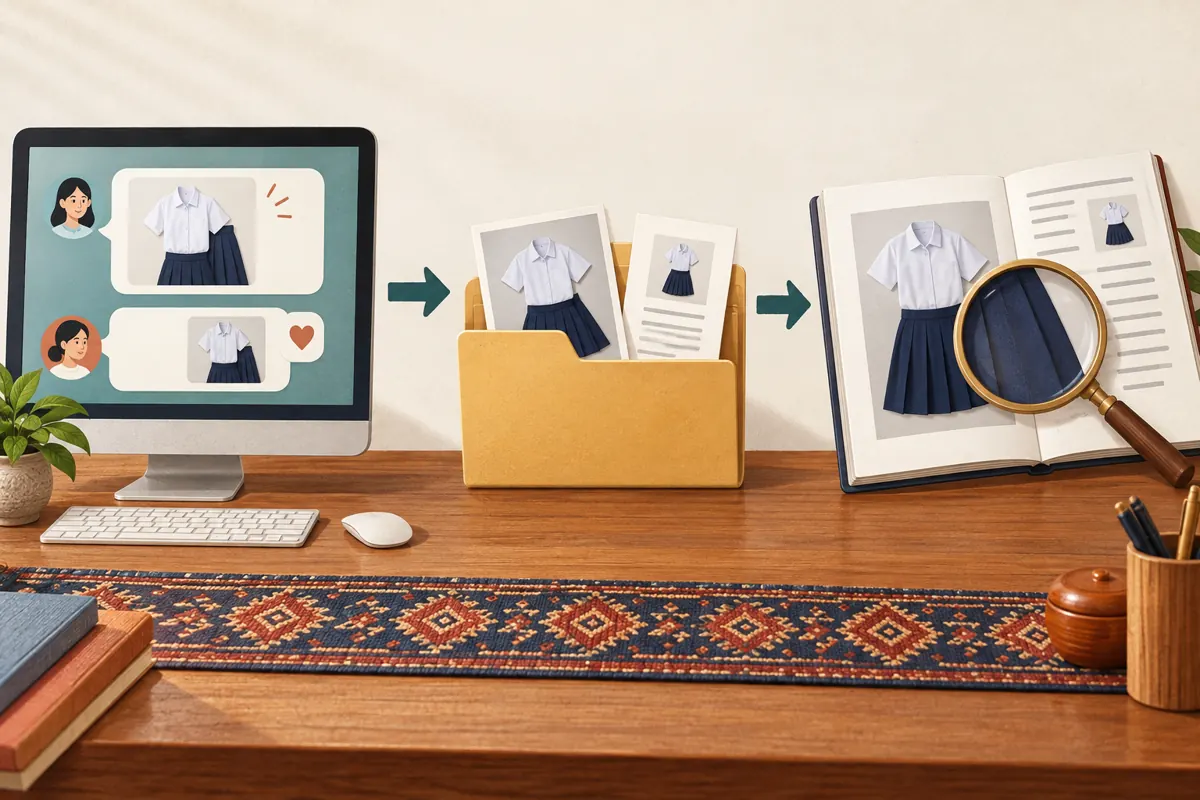
5. Treat the export as a dated record, not a complete history
An archive should not be assumed to contain every earlier version of a caption or every message that once existed. Telegram permits message deletion, with the available scope depending on the conversation. Its FAQ describes deletion options and distinguishes private conversations from other contexts. [Telegram FAQ on deleting messages](https://telegram.org/faq#q-can-i-delete-my-messages)
The practical consequence is to state what your record shows at the time you collected it. Write that the exported caption describes a shirt, rather than claiming it always described only a shirt. If an earlier version matters and you have no reliable record of it, leave that uncertainty visible. For future promotions, plan a capture after the offer has been checked and another after a material correction or campaign closure. Preserve each separately, with a short explanation of why you created it.
6. Review the promise through a buyer’s eyes
Read the campaign as a parent choosing a uniform, not as the person who wrote it. Compare the pictured items with the stated inclusions. Check whether the size guidance explains what to measure and whether collection details identify the actual shop. If the offer mentions a price, confirm that the currency and unit are explicit. A price for one shirt should not depend on readers guessing that the trousers are only styling.
Use a simple review note with four fields: archived wording, possible misunderstanding, missing information and proposed correction. In a hypothetical Phnom Penh shop, an image of an embroidered shirt could prompt a reasonable question about whether embroidery is included. The next post could show the plain shirt first and describe embroidery separately. That is a content decision supported by the mismatch you found. It does not require a claim about how many customers misunderstood the original.
7. Keep SMM service records separate from offer evidence
An SMM panel record can establish what service was requested and which public destination was supplied. It cannot explain what a parent understood from a uniform photograph. Keep any relevant order reference in a separate campaign note, linked to the public post where applicable. Do not place account credentials, payment details or an entire customer conversation into the content archive just to make the folder look comprehensive.
The supplied angkorsmm.com catalogue includes the exact title Telegram Combo Arabic - [Views/Reaction/Share]. That title labels a Telegram combination involving views, reactions and shares, but the supplied description is empty. It provides no basis for confirming delivery methods, audience identity or suitability for Cambodian uniform buyers. Treat the wording as a catalogue label, not verified performance evidence. Purchased engagement is not evidence of genuine interest, sales, ad delivery or Cambodian users. An archive does not establish an official relationship between a panel and Telegram either.

8. Share findings without distributing private conversations
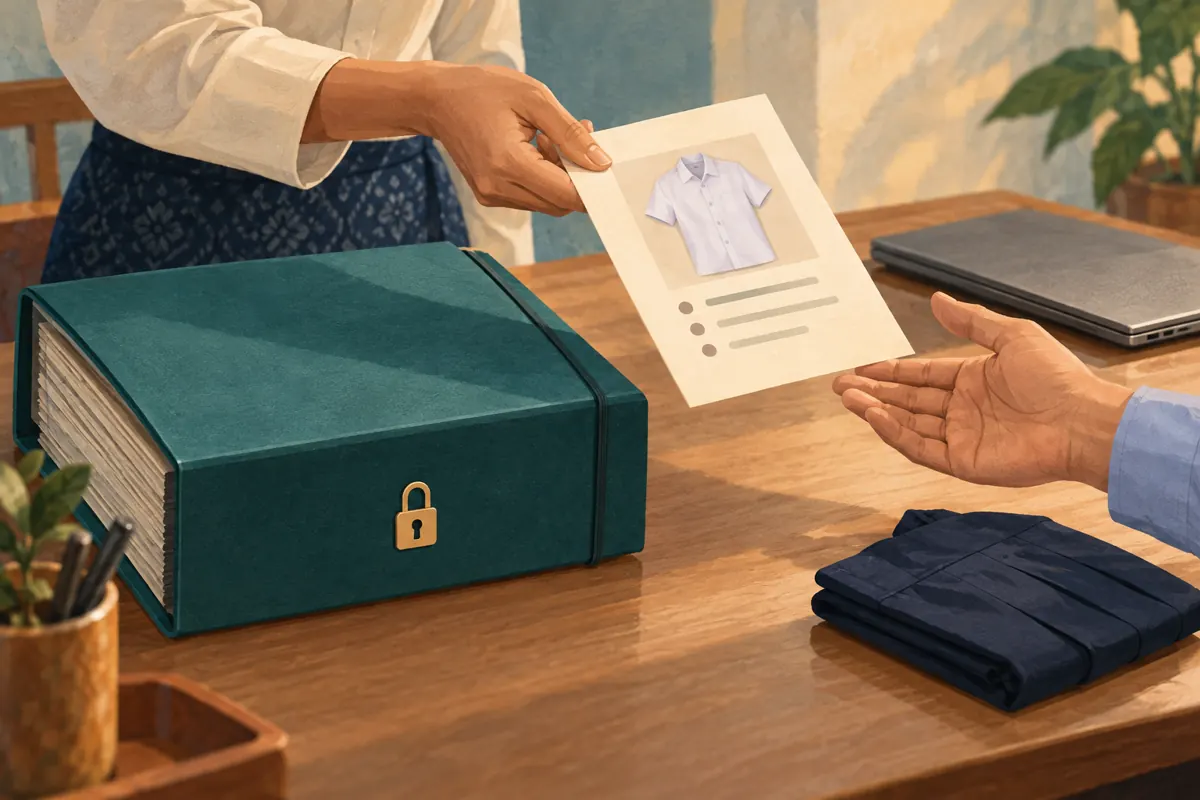
The person designing the next promotion usually needs the approved photograph, the clarified offer and the reason for the revision. They rarely need a complete conversation history. Prepare a short extract for that handoff and retain the original archive in storage controlled by the business. Make the extract visibly separate from the original so an edited review document is never mistaken for an untouched record.
Uniform enquiries can contain children’s names, measurements, school details and contact information. Where such material is genuinely necessary for an internal review, limit who can access it and decide when it should be removed. For a designer, summarise the communication problem without copying identifying details. For panel support, provide only the relevant order reference and public destination needed to explain the issue. A full campaign archive is usually far broader than that support task requires.
9. Avoid the shortcuts that weaken the review
One common mistake is preserving the photograph but losing the caption that defined the offer. Another is collecting a large export and assuming its size proves completeness. A third is combining several seasonal campaigns under an unclear folder name, leaving staff unsure which collection terms apply. Each shortcut makes the next promotion harder to approve because reviewers must reconstruct context that should have been recorded.
Also avoid rewriting the archived wording to make it clearer. Put corrections in your findings document and keep the captured material intact. Do not label every archived question a qualified lead, or interpret an engagement increase as evidence that the clarified offer worked. If a review suggests confusion about set contents, report that specific observation. Business outcomes need their own records, such as confirmed orders and fulfilment information, with any attribution uncertainty explained.
10. Turn the archive into a better campaign brief
Finish with a decision for each reviewed asset: reuse after checking, revise, or retire. A measuring demonstration may remain useful after its instructions are verified. A photograph showing unavailable colours may need replacement. An expired offer should not become the starting point for a new caption without checking stock, pricing and collection arrangements again. An archive preserves context; it does not approve future use.
For the hypothetical Battambang shop, the resulting brief could request a shirt-only cover image, an explicit statement of included items, a separate note about alterations and a current collection instruction. Assign one person to confirm product facts and another to read the post as a customer. Keep the previous archive available for reference, then save the newly approved campaign under a distinct name. The useful result is a clearer public offer and a traceable explanation for the changes.
Frequently asked questions
Should a small uniform shop choose HTML or JSON?
Choose HTML when the main task is reading captions and comparing photographs. Choose JSON when a designated reviewer has a specific structured-data workflow. The important test is whether the intended reviewer can locate and interpret the required material. Neither choice removes the need to check scope, missing media and dates.
Can an export prove exactly what every customer saw?
No. It records material available within the export’s scope, rather than each person’s viewing experience. Customers may have encountered a forwarded image, an earlier version or only part of a campaign. Describe what the archive contains and leave those exposure questions unresolved unless separate evidence answers them.
Should we send the complete export when asking an SMM panel about an order?
Usually, a focused explanation is more useful. Identify the order, its public target and the specific issue. A complete archive can include unrelated content and personal information while making the problem harder to find. Keep the archive internally and prepare only the relevant extract if additional context is needed.
How often should we archive a promotion?
Use meaningful campaign events rather than exporting repeatedly without a purpose. Consider a checked launch version, a material correction and campaign closure. The right frequency depends on how often the offer changes and why you need the record. Assign an owner so capturing and checking the archive actually happens.
Can we reuse an archived offer if its engagement looked strong?
Review the product facts first. Confirm availability, included items, currency, collection arrangements and permission to reuse the assets. Engagement alone does not establish local demand or commercial success, especially when purchased activity was involved. Reuse an asset because it remains accurate and useful, with a clear enquiry route.
Explore the current service catalogue, create an account, or ask a specific question through support tickets.
Prepared with AI assistance. Illustrations explain the workflow and do not represent customer results.