22/10/2026 05:58
Watch the Demo or Reuse the Footage? YouTube License Choices for Cambodian Stencil Shops

A useful stencil demonstration can serve several purposes: help a buyer position a pattern, show a decorator how to load a roller, or give a workshop teacher material for a lesson. Those purposes do not necessarily require the same permission to reuse the footage. Before promoting a YouTube demonstration, a Cambodian shop should decide what it wants other people to do with the video. This article follows a hypothetical Phnom Penh stencil business preparing a Khmer-language tutorial. The workflow connects the license decision to the actual video components, a clear publishing handoff and a separate review of any SMM-panel proposal.
1. Describe the intended use before opening settings
In this hypothetical example, the shop sells reusable wall stencils and films a demonstration of aligning the second repeat. Its immediate goal is to help prospective customers understand the positioning marks. A local decorating tutor also asks whether the footage can appear in a training video. The owner initially treats both requests as ordinary sharing, but the tutor wants to edit the material into another production.
Write two separate sentences in the project brief: what customers should learn, and what other creators may do with the recording. For example, the first might say that viewers should understand how to keep a border level. The second might say that reuse requests need individual review. This distinction helps the employee uploading the tutorial avoid making a broad licensing choice simply because the business wants more people to watch.
2. Understand what the license choice actually changes
YouTube offers the Standard YouTube license and a Creative Commons Attribution option. The standard option is the default. YouTube explains that selecting Creative Commons Attribution allows others to reuse the work under CC BY terms, and that all included content must be eligible for that licensing. These are permission choices, not indicators of production quality. The supporting reference is YouTube Help’s License types on YouTube page.
Creative Commons explains that CC BY permits sharing and adaptation, including commercial use, subject to its conditions. Attribution must not imply endorsement. Read the exact license linked to the material rather than relying on the words “free video.” For the hypothetical stencil shop, broad reuse could suit an intentionally open teaching resource. It could conflict with a plan to review every commercial adaptation. Choose according to that practical consequence, not an expectation of better reach.
3. Review the components, not just the finished file
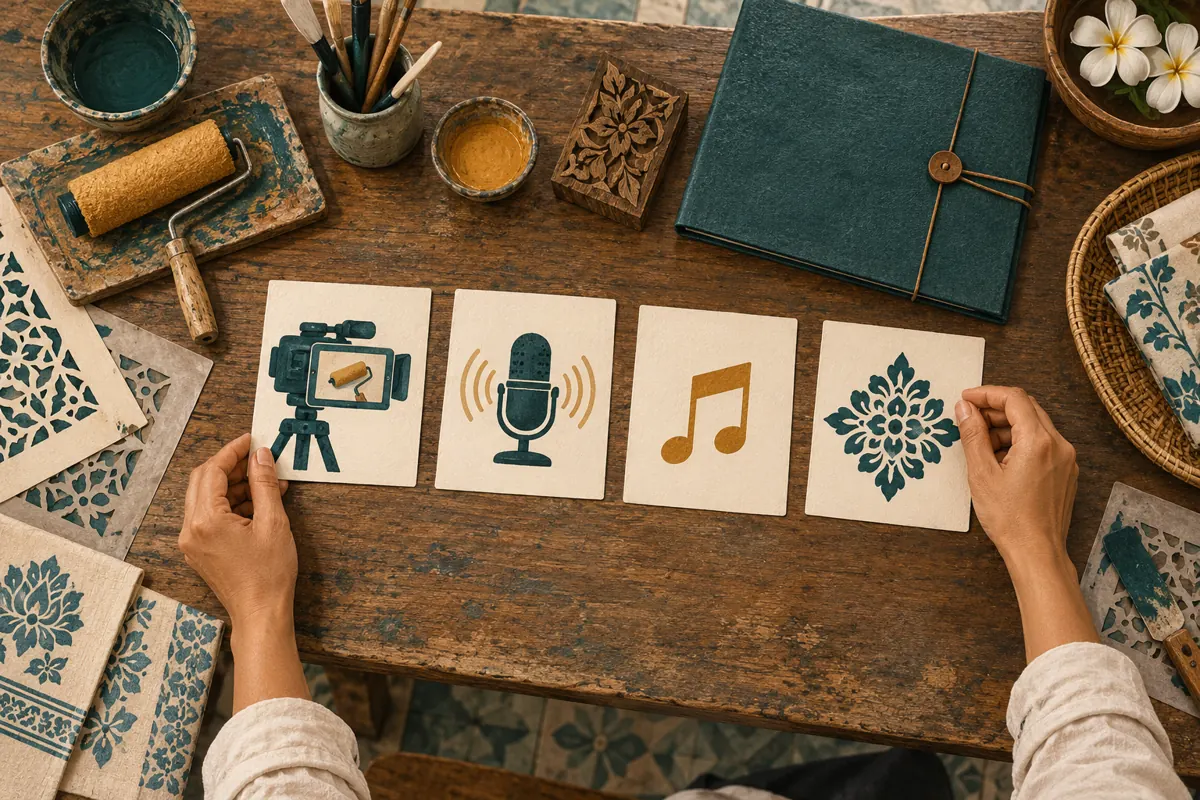
Make a short inventory containing the camera footage, spoken explanation, soundtrack, stencil artwork and any inserted photographs. Beside each component, record who supplied it and where the permission information is kept. A finished video can look entirely consistent while combining material from several sources. An editor’s assurance that a track was available to download does not answer whether the shop can include it in an openly reusable production.
In the hypothetical workshop, the owner filmed the roller demonstration but an outside illustrator supplied the pattern and an editor added music. Ask those contributors about the intended licensing before selecting Creative Commons. If the answer remains unclear, hold that decision and replace or remove the uncertain component where practical. Keeping the standard setting does not resolve missing permission to upload someone else’s material; the underlying upload still needs its own review.
4. Make the decision with a concrete reuse scenario
Instead of asking whether the owner likes the idea of sharing, describe a realistic outcome. Another decorator might shorten the demonstration, add a different introduction and include it in a commercial course. Would that fit the shop’s intended permission? This question is easier to answer than an abstract debate about openness. Include the person responsible for the artwork as well as the person responsible for marketing.
If the business only wants customers to watch its explanation, there is no need to choose Creative Commons merely to express enthusiasm about promotion. If it deliberately wants an adaptable teaching resource, prepare a version whose components support that intention. A separate recording can be helpful: use a simple demonstration pattern, remove temporary offers and explain the technique without referring to one customer’s project. This creates a resource that remains understandable outside the original campaign.
5. Review the setting on the exact upload
On a computer, open YouTube Studio, select Content and choose the relevant video. In its Details page, open Show more and locate License. Review the selection against the approved brief, then save any intended change. YouTube’s license instructions describe this route, while its video-settings guide explains the general editing and saving process.
Before editing, identify the upload by both its title and its actual demonstration. Two recordings may show the same stencil but contain different music or narration. After saving, reopen the details and confirm the result. Record the video URL, selected license, review date and reviewer in the handoff note. For this hypothetical shop, that note should explicitly identify the alignment tutorial, so a later product montage does not inherit a decision made for different material.
6. Keep local customer guidance separate from reuse information
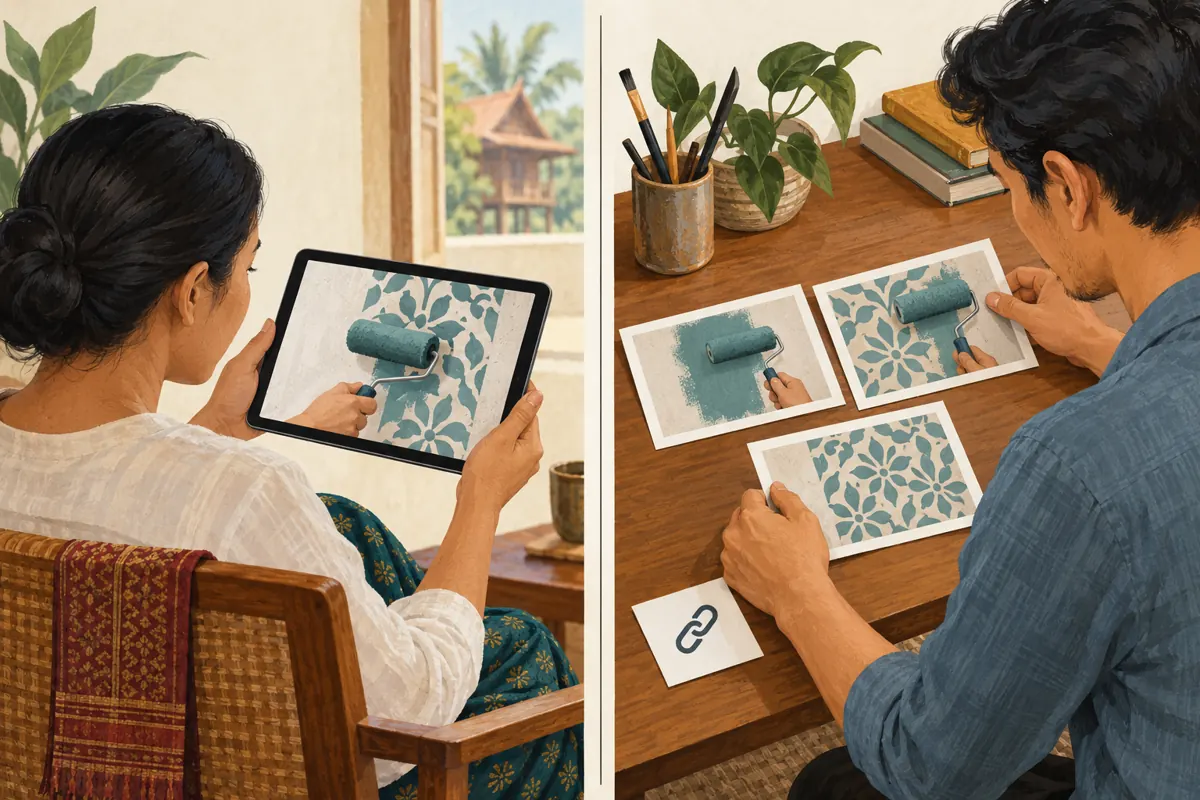
A Cambodian viewer looking for a stencil should not have to decode a licensing note to discover what the shop sells. Prepare the customer explanation in the language the intended audience understands. Identify the demonstrated pattern, distinguish the stencil sheet from the painted result and explain what information the shop needs for an enquiry. A useful request might ask customers to send the intended surface and approximate wall dimensions.
Keep the reuse explanation in a separate, clearly worded part of the description. If staff prepare Khmer and English versions, have a fluent reviewer check whether both express the same permission. Avoid casually translating “credit required” into “ask us first,” because those phrases describe different expectations. Also remove short-lived sales promises from material intended for repeated educational use. Otherwise, another creator could preserve an old offer inside an otherwise useful explanation.
7. Prepare usable attribution when borrowing material
YouTube recommends identifying the work’s title, author, source URL and license when crediting Creative Commons material. Build that information while collecting the source, rather than trying to reconstruct it after editing. Keep the supplied notices and exact license reference. Creative Commons also explains requirements concerning changes; check the applicable version and make adaptations clear.
For a hypothetical borrowed alignment clip, the editor’s working record could contain the original title, creator name, source link, license link and a note that the clip was shortened and given Khmer narration. Replace every placeholder with verified details before release. Save the original source reference alongside the edit notes so another employee can check it later. A vague thank-you to an unnamed creator is much less useful than a record that identifies the precise material.
8. Put SMM-panel proposals through a separate review
The supplied angkorsmm.com catalogue includes “YouTube Shorts Like ~ Max 5k ~ 5k/days ~ Instant ~ 𝐍𝐎 𝗥𝗘𝗙𝗜𝗟𝗟”. Its title presents a Shorts-like service; the supplied description is empty. The timing and quantity language is catalogue wording, not independently established performance. Nothing supplied establishes content permissions, Cambodian audience origin, official YouTube affiliation or genuine buying interest. A license decision cannot fill those gaps.
YouTube’s Fake engagement policy prohibits artificial increases in engagement and warns that a hired promoter’s actions can affect the channel. A service that artificially inflates likes should therefore be rejected, even when the shop owns every video component. Purchased engagement is not evidence of genuine interest, sales, ad delivery or Cambodian users. Keep any panel review separate from the rights record, and never treat a completed service order as proof that promotion was compliant or commercially useful.
9. Avoid three mistakes that survive a polished edit
The first mistake is treating a paid production invoice as the complete reuse record. An invoice may explain what was delivered without resolving the permission question the current project raises. Ask for the relevant terms and identify the actual material. The second mistake is assuming a visible watermark replaces the license decision. A shop name may identify the source, but it does not explain the intended scope of reuse.
The third mistake is treating a later setting change as a recall button. Creative Commons states that its licenses are not revocable for recipients who continue to follow their terms. Changing future distribution does not automatically erase earlier permissions. Before releasing an open resource, consider whether the owner would remain comfortable with an adaptation appearing after the current campaign ends. If there is a serious dispute about existing reuse, preserve the records and seek advice based on the actual facts.
10. Close the handoff with a customer-focused review
Give the person sharing the video a compact package: the approved URL, the customer-facing explanation, the license decision and the location of supporting records. Name one colleague to handle reuse enquiries so customers receive consistent answers. Ask the uploader to flag later changes to music, artwork or inserted footage. A permission decision attached to yesterday’s edit should not silently stand in for review of tomorrow’s replacement.
Then assess the demonstration through actual customer questions. In the hypothetical shop, repeated confusion about whether the alignment marks remain visible suggests a missing close-up. An enquiry about delivery requires a practical fulfilment answer. Neither problem is solved by changing the license or increasing a counter. Use these questions to improve the next recording, while keeping sales records, customer feedback and any service-order history distinct enough that staff can explain what each one really demonstrates.

Frequently asked questions
Does selecting Creative Commons help my stencil video reach Cambodian buyers?
Treat it as a reuse decision, not an audience-targeting method. The documented purpose is to grant permission under license terms. For local relevance, make the demonstration understandable, explain the product and provide an accurate enquiry route. Assess buyer interest from actual conversations and transactions, rather than assuming a license label changes who watches.
Can I choose Creative Commons if the video has a Content ID claim?
YouTube says a video with a Content ID claim cannot receive its Creative Commons Attribution setting. Review the claimed component and the rights involved. Do not interpret the absence of a claim as a complete permission audit either; keep the component inventory and contributor records as part of your own review.
What if I want only one decorating tutor to reuse the demonstration?
Describe that specific request to the relevant rights holders and document the intended arrangement. Record which footage, project and edits are involved. A public CC BY choice is broader than a request from one named tutor. Keep the tutor’s arrangement identifiable so staff do not present it as a general offer to everyone.
Can a panel provider decide the license for us?
A catalogue entry does not establish authority over the video’s components. The business should obtain the necessary contributor information and make the decision through its authorized publishing process. An outside provider’s promise of promotion does not settle soundtrack permissions, artwork ownership or the scope of an earlier agreement.
Should we stop sharing the tutorial while one permission question is unresolved?
Pause the affected release or version while you identify the uncertain material. You may be able to prepare a replacement using clearly documented components, such as fresh narration and a different sample pattern. Keep the reason for the hold precise, so the team knows what evidence or edit will allow the review to finish.
Explore the current service catalogue, create an account, or ask a specific question through support tickets.
- YouTube Help: License types on YouTube
- YouTube Help: Edit video settings
- Creative Commons: Attribution 3.0 Unported
- Creative Commons FAQ: What if I change my mind about using a CC license?
- YouTube Help: Fake engagement policy
Prepared with AI assistance. Illustrations explain the workflow and do not represent customer results.