
19/10/2026 06:31
Which Sound Fits Your Café Video? A TikTok Audio Workflow for Cambodian Businesses
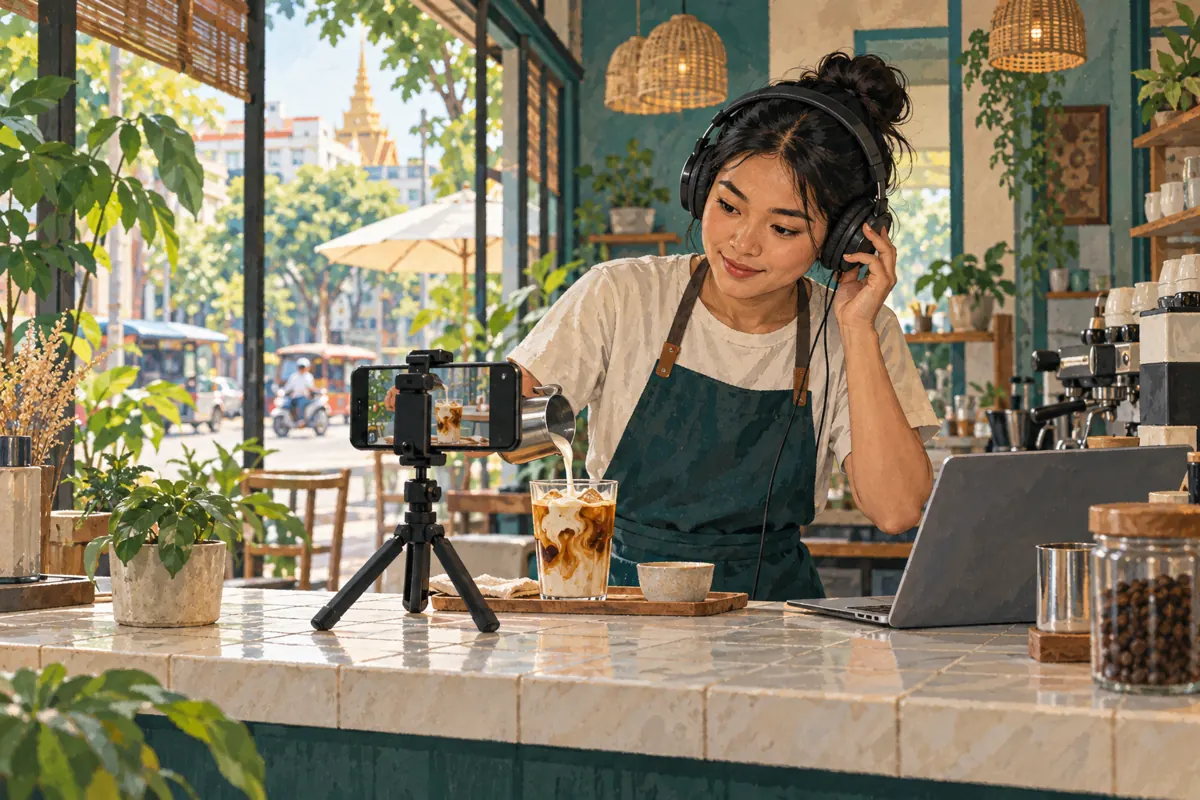
A café video can look inviting while its soundtrack creates confusion. Music may cover the drink name, a blender may interrupt the explanation, or a song chosen because it is popular may be unsuitable for commercial use. For Cambodian businesses promoting drinks, food or takeaway service on TikTok, audio deserves a decision before editing begins. This guide follows a hypothetical Phnom Penh café preparing an iced-coffee video. It explains how to choose the sound’s purpose, review music availability, record a clear message and test the finished clip. It also shows where an SMM panel listing stops being relevant: purchased engagement cannot establish music permissions, audience understanding or local demand.
1. Decide what the viewer needs to hear
Start with one practical question the video should answer. In the hypothetical café example, the question is whether customers can request their iced coffee without added syrup. That makes the spoken explanation more important than background music. Write the answer before selecting a track: show the ingredients, explain the available choice and tell customers how to request it. Avoid an opening that spends most of the clip describing the café’s atmosphere.
Assign audio a main job: explanation, demonstration or mood. Explanation needs intelligible speech. Demonstration may benefit from the actual sound of ice dropping into a glass or a lid closing. Mood may suit a quiet visual tour. These jobs can coexist, but one should lead. If every layer competes for attention, remove a layer before trying to make everything louder. A useful soundtrack helps viewers understand what they are seeing.
2. Treat a business promotion as commercial content
An unpaid post advertising your own café still serves a commercial purpose. TikTok’s guidance says businesses should use its Commercial Music Library for commercial TikTok activities, including organic content, video ads and branded content. It also advises checking proper licensing when using other users’ original sounds or other licensed audio. A familiar song appearing in someone else’s video does not establish permission for your promotion. The relevant distinction is the intended use, not whether you paid to distribute the post.
Before choosing music, describe the intended use in one sentence: for example, a café product demonstration intended for its TikTok account. If the team later wants an advertisement or a version for another platform, review that use separately. Do not assume a sound selection automatically covers every destination. TikTok’s official explanation is available in [About the Commercial Music Library](https://ads.tiktok.com/resources/help/article/commercial-music-library?lang=en).
3. Check the track against the intended market and placement
TikTok’s current instructions explain that Business Accounts see Commercial Sounds when adding sound to a new video. Personal accounts can select Commercial Sounds from the Sounds dropdown. In the library workflow, TikTok tells users to select the campaign region and offers filters including usable placements, mood and duration. Follow the controls available in your account, using the actual intended market rather than choosing another region simply to reveal a preferred track. See [How to use the Commercial Music Library](https://ads.tiktok.com/resources/help/article/how-to-use-the-commercial-music-library?lang=en).
For a Cambodia-focused café campaign, check the relevant availability and placement information before editing around the music. If the interface does not let you confirm suitability, leave that track out while you resolve the question. Keep a short note identifying the track, where you selected it, the intended use and the date checked. This is a working reference, not a certificate that overrides the applicable terms.
4. Capture useful café sounds without unwanted background audio
Before filming, listen to the room for a moment. A shop speaker, television or nearby phone may introduce music into what the team thinks is a clean recording. Choose a quieter recording period and turn off controllable background playback. Keep customers’ conversations outside the recording area. Record a short sample, then listen back before preparing the complete drink demonstration. Catching a distracting sound now is easier than rebuilding the edit later.
For the hypothetical iced-coffee video, capture the pour and the spoken explanation separately. This gives the editor control over when each sound appears. Keep the microphone away from splashes and avoid touching the phone while recording. If traffic or equipment makes the explanation difficult to hear, record the narration in a quieter corner afterward. Match it honestly to the visible process; do not add sound effects that imply a product feature the drink or packaging does not have.
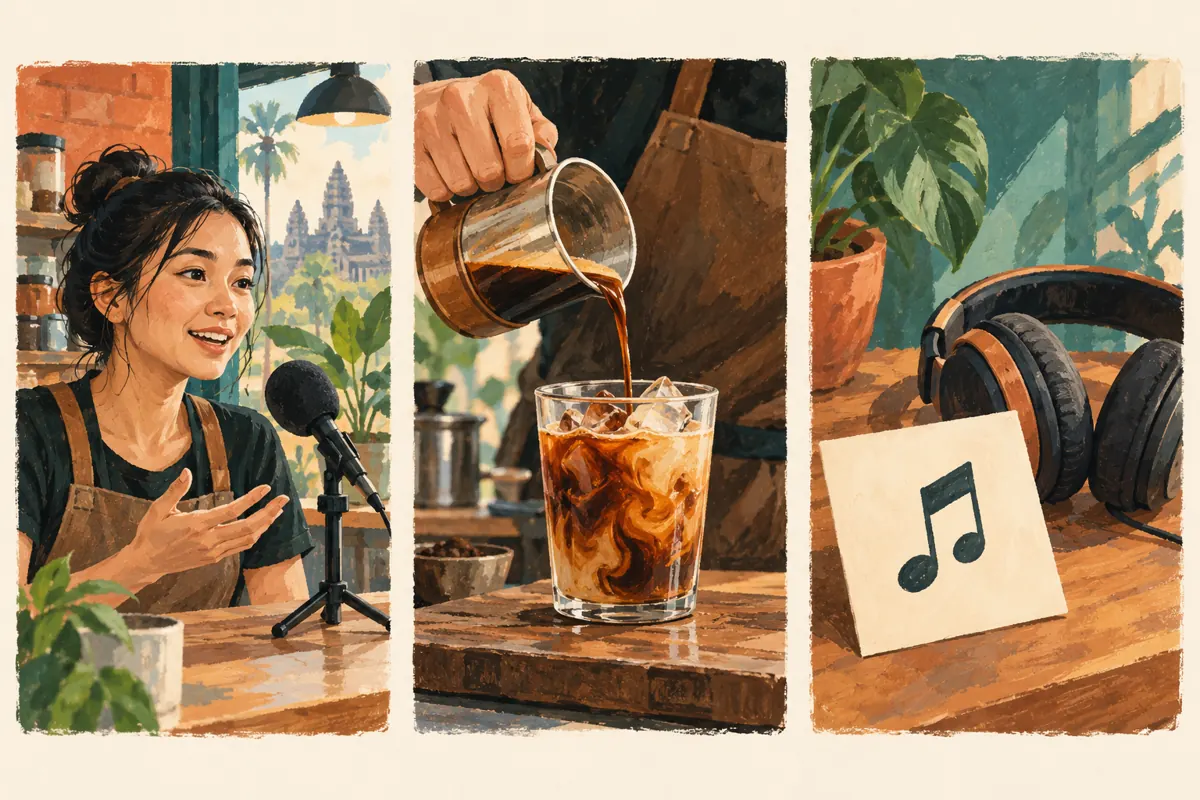
5. Make the spoken offer understandable to Cambodian customers
Choose the spoken language from the customers the café intends to serve. A neighbourhood business addressing Khmer-speaking customers can record its main explanation in Khmer, even when its internal planning notes are in English. Use the product name staff actually recognise at the counter. If an English menu term is necessary, say it clearly and connect it to the visible item. Avoid switching languages so frequently that the available choice becomes hard to follow.
Keep factual distinctions precise. In this hypothetical example, ‘no added syrup’ should not become ‘sugar-free’ unless the business can support that separate claim. Milk, premixed ingredients or toppings may affect what the finished drink contains. Ask the person who prepares the order to check the script. Then add accurate captions for the important information so the video remains useful without sound. The spoken offer, caption and actual ordering options should describe the same product.
6. Choose music after the message works
Build a rough edit with the voice and necessary product sounds first. Watch it once without background music. If the sequence feels confusing, fix the sequence rather than asking a soundtrack to hold it together. The café example should make the ingredient choice understandable before any decorative audio is added. A short pause during the pour can help the viewer connect the explanation with the preparation.
Next, audition suitable music under the actual narration. Listen for competing vocals, abrupt changes or strong beats that distract from the ordering instruction. A track can be appealing on its own and still be a poor fit for spoken content. Lower or remove it where speech needs space. There is no universal volume setting that works for every recording and phone. Judge the result by whether someone unfamiliar with the script can repeat the offer accurately.
7. Keep an editable version for future uses
Save the original footage, separate narration and an export without added music. Give these versions understandable names so a colleague can distinguish the clean edit from the TikTok-specific version. This makes it possible to replace a track without recreating the whole video. It also helps when the café changes an ingredient, records a new language version or adapts the demonstration for another channel.
Ask a freelance editor for these deliverables at the beginning of the assignment. A finished video with music permanently mixed into the speech is harder to revise. Specify which person selects the track and which person confirms its intended use. For a second platform, start from the clean version and check audio suitability there. Keeping separate components is a production habit that reduces rework; it does not itself provide additional music rights.
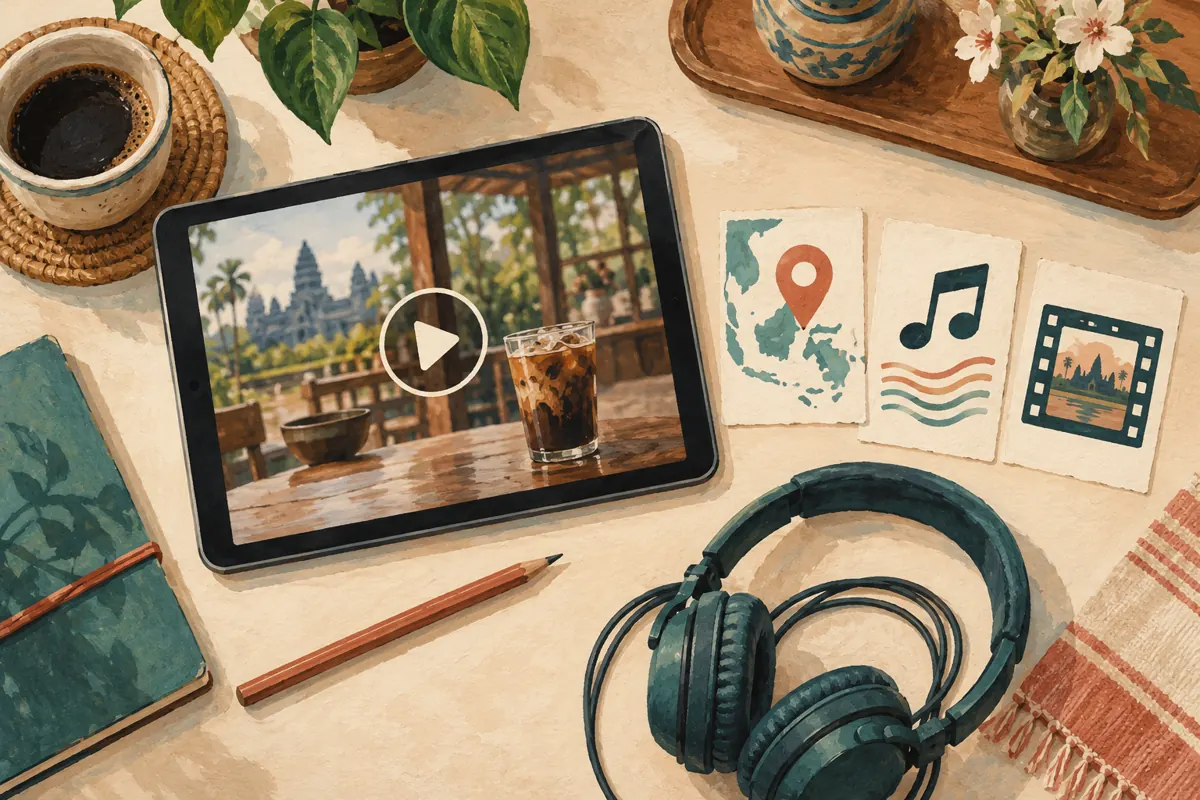
8. Understand what an SMM panel service cannot solve
The supplied angkorsmm.com catalogue includes the exact listing “TikTok - Video Views ~ Max Unlimited ~ 10M-500M/Days ~ Instant ~ 𝐍𝐎 𝗥𝗘𝗙𝗜𝗟𝗟”. Its name identifies a video-view offering, but no supporting description was supplied. Treat its speed and capacity wording as listing claims, not verified performance. Nothing in the provided information establishes music clearance, Cambodian audience origin, genuine customer interest or official TikTok advertising delivery.
TikTok prohibits services that artificially increase engagement, as explained in its [Integrity and Authenticity guidelines](https://www.tiktok.com/community-guidelines/en/integrity-authenticity/). For this workflow, do not use purchased views as an audio test or a substitute for legitimate promotion. They cannot tell you whether customers understood the offer or whether a track is suitable. A business reviewing panel options should resolve those questions independently and avoid services that conflict with platform rules. A larger displayed count is not evidence that the café’s message worked.
9. Run a listening test before distribution
Give the finished draft to a colleague who has not read the script. Play it through an ordinary phone speaker at a comfortable volume. Ask what drink was shown, which choice was available and how a customer would request it. If the answers are incomplete, identify the cause: unclear wording, competing music, a rushed sentence or a mismatch between speech and pictures. Change that specific problem and listen again.
Then check with headphones for clicks, distracting background conversations and abrupt cuts. Finally, watch with sound off to confirm the essential message survives in the visuals and captions. These checks answer different questions; none predicts reach or sales. When the café publishes, review the actual post as well as the saved export. If the audio behaves differently or an availability notice appears, inspect the platform’s explanation before deciding what to change.
10. Avoid shortcuts that create more work
Common mistakes include choosing a trending song before checking its commercial suitability, assuming an ‘original sound’ label proves ownership, and leaving shop music underneath a voice recording. Another is raising every audio layer when the narration sounds weak. Start by reducing competing sound or rerecording the sentence. Do not switch account types simply to obtain a song without resolving whether the intended business use is permitted.
After publication, collect feedback that helps the next edit. A genuine question about the syrup choice may reveal that the wording needs improvement; it is not automatically evidence that the soundtrack failed. Ask staff whether customers use the product terms from the video, while avoiding claims that the video caused purchases without supporting evidence. For the next clip, change a clearly identified weakness. Useful audio comes from a repeatable listening process, not from chasing a popular sound or a bigger counter.

Frequently asked questions
Does a café video need background music?
No. Clear narration and carefully recorded preparation sounds may carry the whole video. In the hypothetical café example, hearing the ingredient explanation matters more than maintaining a musical background. Add music only when it supports the viewing experience and its intended use is suitable.
Can we use a customer’s original sound because they gave permission?
Their permission may not resolve every element in the recording. It could contain someone else’s song or another recording they do not control. Identify what is actually audible and what permission covers. If that remains unclear, use a sound you can properly establish as suitable or record a fresh explanation.
What if we cannot confirm music availability for our Cambodia campaign?
Do not treat availability in another region as confirmation. Check the relevant library information and seek clarification through the platform’s help resources. Meanwhile, finish the video with your own recorded speech and product sounds, ensuring those recordings do not contain background music that creates the same unresolved question.
Can we reuse the TikTok export on Facebook or Instagram?
Review music suitability for the new destination instead of assuming it transfers with the file. Keep an export without added music so adaptation is straightforward. The footage and spoken explanation may remain useful, but the soundtrack and its permitted use need their own decision.
Would ordering views help us compare two soundtracks?
Purchased views are not a reliable listening study and do not establish Cambodian customer preference. Start with direct comprehension checks using people who understand the intended language. If you later compare published versions, document the other differences and treat results cautiously rather than attributing every change to music.
Explore the current service catalogue, create an account, or ask a specific question through support tickets.
- TikTok Business Help Center: About the Commercial Music Library
- TikTok Business Help Center: How to use the Commercial Music Library
- TikTok Community Guidelines: Integrity and Authenticity
Prepared with AI assistance. Illustrations explain the workflow and do not represent customer results.