
20/10/2026 08:34
Selling Your Own Soap or Posting for a Brand? TikTok Disclosure for Cambodian Shops
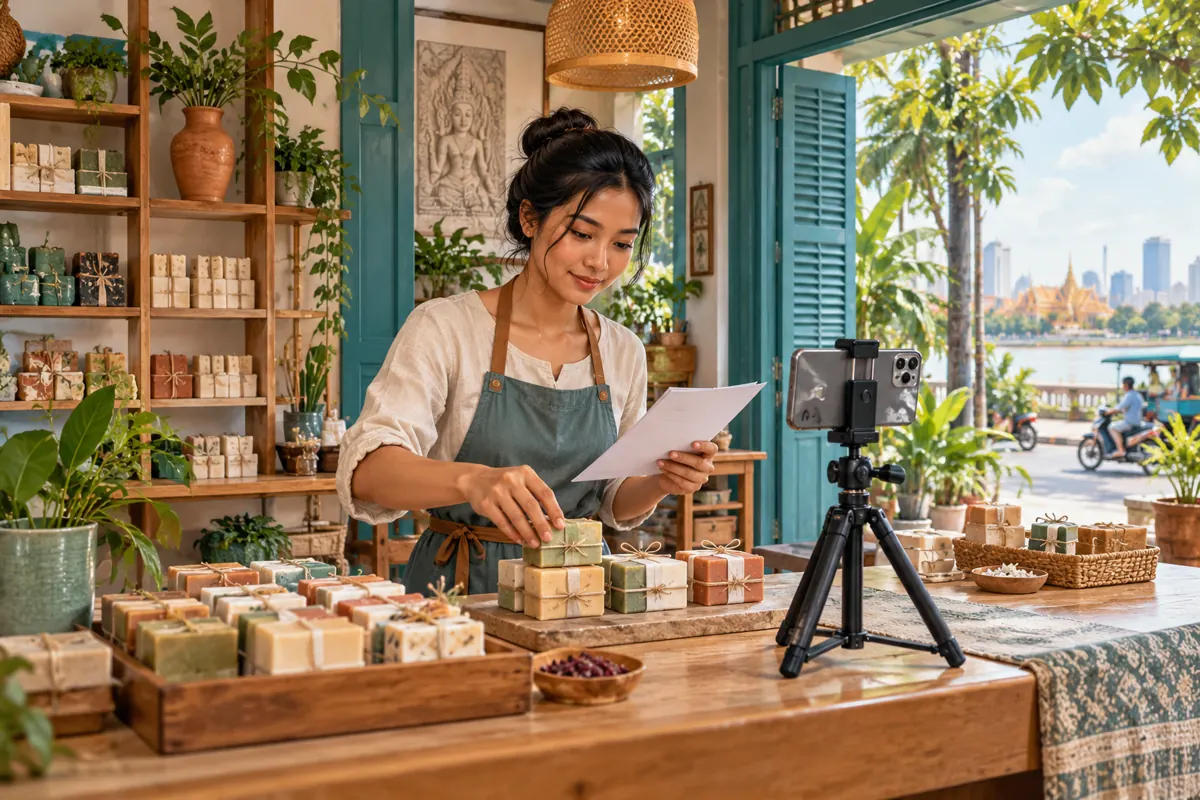
A soap-wrapping video can feel like a simple behind-the-scenes update. Yet when it shows products available from your shop and invites viewers to order, it also serves a commercial purpose. For Cambodian businesses preparing TikTok content, identifying that purpose belongs in the production process, alongside checking the packaging and confirming stock. This guide uses a hypothetical soap shop to explain how to choose an appropriate disclosure, coordinate with an independent creator and review the finished post. It also explains where an SMM panel catalogue fits into the decision: a service listing cannot establish the commercial relationship behind a video or prove that viewers want to buy.
1. Start with the relationship behind the video
Before filming, write down who owns the products, who will publish the video and what each participant receives. These facts are more useful than deciding whether the video looks like an advertisement. A quiet packing demonstration may still promote a business, while an elaborate production does not automatically establish a paid relationship.
TikTok requires its commercial-content disclosure setting for posts promoting a brand, product or service. Its guidance covers both your own business and third-party promotion involving payment or another incentive. For a shop team, the practical question is therefore broader than whether someone received cash. Record any agreed product gifts or other benefits connected with the post. Resolve uncertainty with the person arranging the collaboration before the editor prepares the final upload.
2. Separate the owner's demonstration from a creator arrangement
Consider a hypothetical Phnom Penh soap shop preparing a gift-box demonstration. The owner films her own products for the shop account and explains how customers can request different wrapping. TikTok distinguishes this own-business promotion from branded content posted for another business: the corresponding labels are Promotional content and Paid partnership.
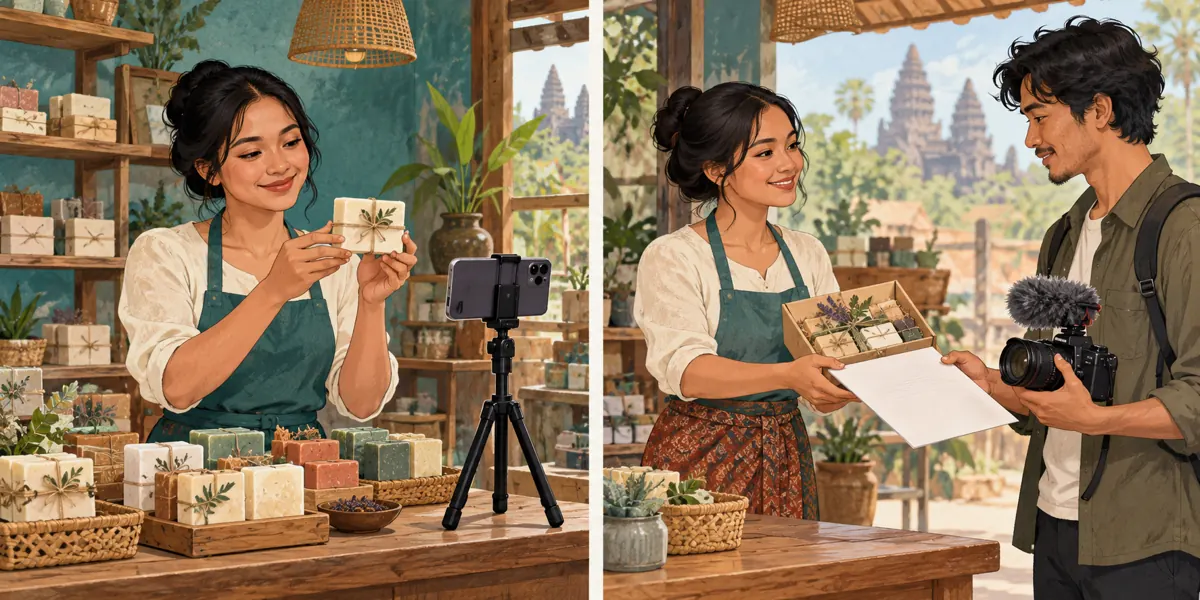
Now change the hypothetical arrangement. An independent creator receives a soap gift box in exchange for making a promotional video on the creator's account. The team should record that exchange rather than describe the clip internally as an ordinary customer review. The creator's personal filming style does not erase the arrangement.
Use a short production note naming the publisher, promoted business and agreed benefit. If several shops contribute products, list each relationship before choosing settings. Do not let a camera operator guess the commercial arrangement from the objects visible on the table.
3. Make the product explanation useful on its own
Choose one buying question for the demonstration. For example, the hypothetical shop could show whether a gift box contains individually wrapped bars or loose bars. Open the actual package, show the contents clearly and explain which wrapping choices customers can request. This gives the video a concrete purpose beyond asking people to like it.
Prepare the spoken explanation in the language your intended customers understand. A shop serving Khmer-speaking buyers can use Khmer narration while keeping any English product names consistent with the packaging. Check that translated descriptions preserve the same offer.
Keep assertions within what the business can substantiate. A visual demonstration can show packaging, shape and presentation; it cannot establish how every buyer will experience a fragrance or a product. Remove unsupported claims rather than expecting a disclosure label to make them acceptable. Check that the demonstrated version is available before inviting enquiries.
4. Add disclosure to the upload review
In TikTok's posting flow, open Content disclosure and ads, which may appear under More options. Enable Disclose commercial content, choose Your brand or Branded content as appropriate, then save and confirm. Review the selection before publishing.
Give this check a named owner. In a small shop, the same person may film, edit and upload, but the tasks still benefit from separate passes. First watch the complete video for product accuracy. Next read the caption against the current offer. Finally inspect the publishing settings. A clear sequence reduces the chance that a last-minute caption edit distracts from the disclosure decision.
Keep a brief internal note of the approved selection and the final video filename. Record the reason in ordinary language, such as promotion of products sold by our own shop. That explanation helps a colleague understand the choice without needing access to private creator negotiations.
5. Agree on creator responsibilities before delivery
For an independent creator collaboration, put practical responsibilities in the brief. Specify who checks product facts, who selects the disclosure, who publishes and who handles corrections. Share confirmed packaging and availability information so the creator does not improvise details from an old product photograph.
Ask to review the proposed commercial context as well as the edit. A creator can explain their own experience honestly, but the shop should not request a script that disguises an agreed promotion as an unsolicited customer discovery. Review factual errors without prescribing invented enthusiasm.
Discuss reuse separately. If the shop wants to use the finished footage elsewhere or consider advertising, state that intention before the creator delivers it. TikTok's business guidance describes brand tagging as a route to collaboration and ad authorization. Read the relevant options before agreeing; do not treat every permission screen as a routine publishing step.
6. Handle a missing or incorrect disclosure deliberately
TikTok allows disclosure to be enabled after posting through the post's Ad settings. However, its help page says a published disclosure label cannot be changed; correcting a mistaken selection requires removing the post and creating another with the correct choice.
Treat these as different situations. If disclosure is absent, inspect the available post settings and the applicable guidance. If the wrong label was selected, plan the correction before circulating the link further. Preserve the approved source video and caption so the replacement does not introduce fresh product errors.
For a hypothetical shop that has already sent the link to a creator coordinator, tell that colleague which post is current. Update any internal campaign reference. If a related third-party service request exists, check its documented terms before assuming that a replacement URL can be substituted. A content correction does not establish a cancellation, refund or transfer right.
7. Review an SMM listing without confusing its purpose
The supplied angkorsmm.com catalogue includes the exact public service name “TikTok Video Views ~ Max Unlimited ~ 10M/Days ~ Instant ~ 𝐍𝐎 𝗥𝗘𝗙𝗜𝗟𝗟”. Its title identifies it as a video-view offering, but the supplied description is empty. The title's delivery language is not independent verification of how the service operates or what it will achieve.
Nothing in that reference establishes Cambodian audience origin, genuine customer interest, official TikTok affiliation or advertising delivery. It also provides no basis for assuming that the service handles disclosure. Purchased engagement is not evidence of sales or demand.
TikTok's Community Guidelines prohibit trading services that artificially boost engagement or manipulate recommendations. Evaluate that boundary before considering any purchase, and decline artificial-engagement services. A correctly disclosed shop video does not make an otherwise incompatible service acceptable. For this workflow, the useful panel-related action is a documented review of the listing and a decision about suitability, not an automatic order after uploading.

8. Prepare the enquiry handoff before promotion
Decide what viewers should do after watching. For the hypothetical soap gift box, ask interested buyers to identify the wrapping option and required pickup date through the shop's established enquiry channel. Keep the request short enough that someone can answer without composing a long message.
Prepare the staff response before publication. It should distinguish confirmed stock from items that need checking, explain whether wrapping is included and identify who confirms collection arrangements. If the team quotes prices in different currencies, make the currency explicit in each quote rather than leaving customers to infer it.
Avoid collecting addresses or other personal order details in public comments. Move the conversation to the shop's chosen private channel when those details become necessary. A useful promotional post leads to a manageable conversation, especially when the person answering messages did not film the demonstration.
9. Measure questions and orders separately from service records
Keep a simple content review log with the video topic, publication reference and genuine questions received. Group questions by what they reveal: confusion about contents, interest in a wrapping option or a request for pickup information. Use those observations to improve the next demonstration.
Maintain any panel receipt or service-status record separately. A status message describes the provider's record; it does not explain why someone contacted the shop. Likewise, a larger visible engagement count does not identify the location or purchasing intention of the people behind it.
In a hypothetical review, repeated questions about whether the box includes wrapping would justify a clearer opening shot. That is an editorial lesson, not proof of a campaign's sales effect. Where a customer voluntarily identifies the video that prompted an enquiry, record that context without claiming it explains every order.
10. Avoid the mistakes that create unnecessary rework
One common mistake is assigning disclosure by visual style: polished equals commercial, casual equals personal. Another is leaving the decision to whoever uploads, even though that person has never seen the creator agreement. Both problems are easier to prevent with a relationship note than to repair after publication.
Do not use a disclosure badge as a substitute for checking the offer. Incorrect package contents, unavailable wrapping and an unclear pickup process still disappoint viewers. Similarly, do not select a label because you hope it will produce a particular reach outcome. Base the choice on the actual relationship.
For the next recording session, place the commercial-context note beside the product brief. Let one colleague check the product facts and the publisher check the settings. Finish by opening the published post and confirming that it represents the approved offer. This turns disclosure into an ordinary production responsibility.

Frequently asked questions
Does a friendly behind-the-scenes video need a commercial review?
Yes. Review what the post promotes and the relationship behind it, rather than its tone. Packing footage can form part of a sales message. Ask whether the shop is presenting available products, directing viewers to enquire or fulfilling a creator arrangement. Record those facts before selecting the setting.
What if the creator receives products instead of money?
Include the products in the arrangement note, especially when they are provided in exchange for promotion. The absence of a cash payment does not make that exchange disappear. Clarify what was agreed, which account will publish and who is responsible for the disclosure before the creator completes the video.
Can shop staff choose the setting for a creator's post?
Staff can provide accurate information about the arrangement and agree on responsibilities, but the publisher needs to check the settings on their own post. Share a concise brief rather than account credentials. Ask the creator to confirm completion and review the public post once it is available.
Does disclosure prove that an SMM service is approved by TikTok?
No. Disclosure concerns the commercial nature of the content. It does not verify a provider, establish platform affiliation or validate an engagement method. Review service claims independently and follow the platform's rules. A catalogue title alone cannot establish genuine viewers, Cambodian users or business results.
What should a small shop improve first if enquiries are unclear?
Review the questions customers actually ask. If people cannot identify the box contents or wrapping option, improve the demonstration and caption. If they understand the product but cannot arrange collection, improve the enquiry handoff. These are specific operational changes; an engagement purchase cannot establish that either problem has been resolved.
Explore the current service catalogue, create an account, or ask a specific question through support tickets.
- TikTok Help Center: Promoting a brand, product, or service
- TikTok Business Help Center: About the Commercial Content Disclosure setting for creators
- TikTok Community Guidelines
Prepared with AI assistance. Illustrations explain the workflow and do not represent customer results.